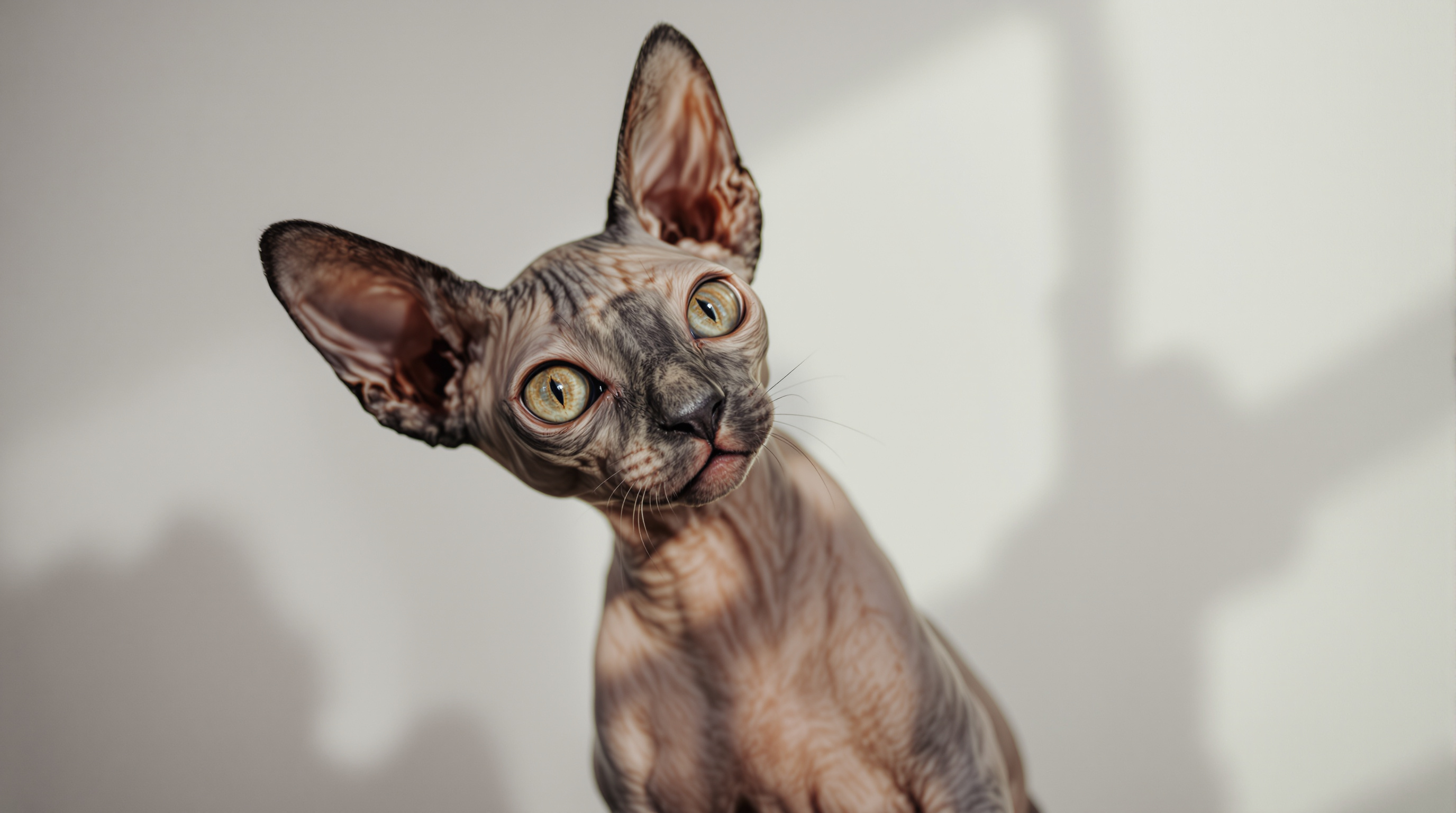
Everything you need to know about hairless cats - answered by experts.
No, most hairless cats aren't completely bald. They typically have a fine layer of peach fuzz that gives their skin a soft, suede-like texture. Some may have light fur on their ears, nose, tail, and toes. The amount of fuzz can vary between individual cats and even change with seasons.
Despite common belief, hairless cats are not truly hypoallergenic. Cat allergies are primarily caused by the Fel d 1 protein found in cat saliva, skin, and urine - not fur. Hairless cats still produce this protein. However, some allergy sufferers find them easier to tolerate because there's no fur to trap and spread the allergen. Always spend time with a hairless cat before adopting to test your reaction.
Hairless cats feel surprisingly warm to the touch! Their body temperature is the same as other cats (around 100-102°F), but without fur insulation, you feel their warmth directly. Many owners describe the sensation as touching a warm, velvety hot water bottle. This warmth is one reason they love to cuddle!
Most hairless cats need weekly baths to remove oil buildup from their skin. Without fur to absorb natural oils, these oils accumulate and can cause skin issues if not regularly cleaned. Some cats may need more frequent bathing (every few days) while others can go up to two weeks. You'll learn your cat's individual needs over time.
Yes, hairless cats can get sunburned! If your cat enjoys sunbathing by windows or goes outdoors, you should use a pet-safe sunscreen on exposed areas like ears, nose, and back. Better yet, limit direct sun exposure during peak hours and provide shaded areas. UV-filtering window films can also help protect indoor sunbathers.
Hairless cats may benefit from clothing in cold environments. If your home temperature drops below 65°F, a cozy sweater can help keep your cat comfortable. However, not all cats tolerate clothing, and overheating is a risk. Watch for signs of discomfort and ensure clothes are soft, breathable, and fit properly without restricting movement.
Hairless cats can be prone to certain health issues including:
Regular veterinary check-ups and preventive care can help manage these risks.
With proper care, hairless cats typically live 12-15 years, similar to other cat breeds. Some have been known to live into their late teens and even early twenties. Key factors for longevity include regular veterinary care, proper nutrition, cardiac screening, and maintaining a safe indoor environment.
Hairless cats, especially Sphynx, are typically excellent with children and other pets. They're social, playful, and adaptable. Their dog-like personalities mean they often get along well with dogs. However, introductions should always be done gradually. Teach children to handle the cat gently, as their skin is more sensitive without fur protection.
Hairless cats actively seek warmth from their human companions because they lack fur insulation. This biological need for warmth combines with their naturally affectionate personalities to create exceptionally cuddly cats. They'll often sleep under covers, sit in laps, and seek out the warmest spots in your home - which is often you!
While technically possible, outdoor access is generally not recommended for hairless cats. They're vulnerable to sunburn, temperature extremes, parasites, and injuries from rough surfaces. If you want to give your cat outdoor time, consider a secure catio or supervised leash walks. Always avoid peak sun hours and extreme weather conditions.
Hairless cat prices vary significantly based on breed, lineage, and breeder:
Yes, hairless cats typically have higher ongoing costs than furry cats due to:
Budget approximately 20-30% more than you would for a typical cat.
Hairless cats are unique companions that require informed ownership. If you're considering adding one to your family, we recommend connecting with reputable breeders, joining hairless cat owner communities, and consulting with veterinarians experienced with these breeds.