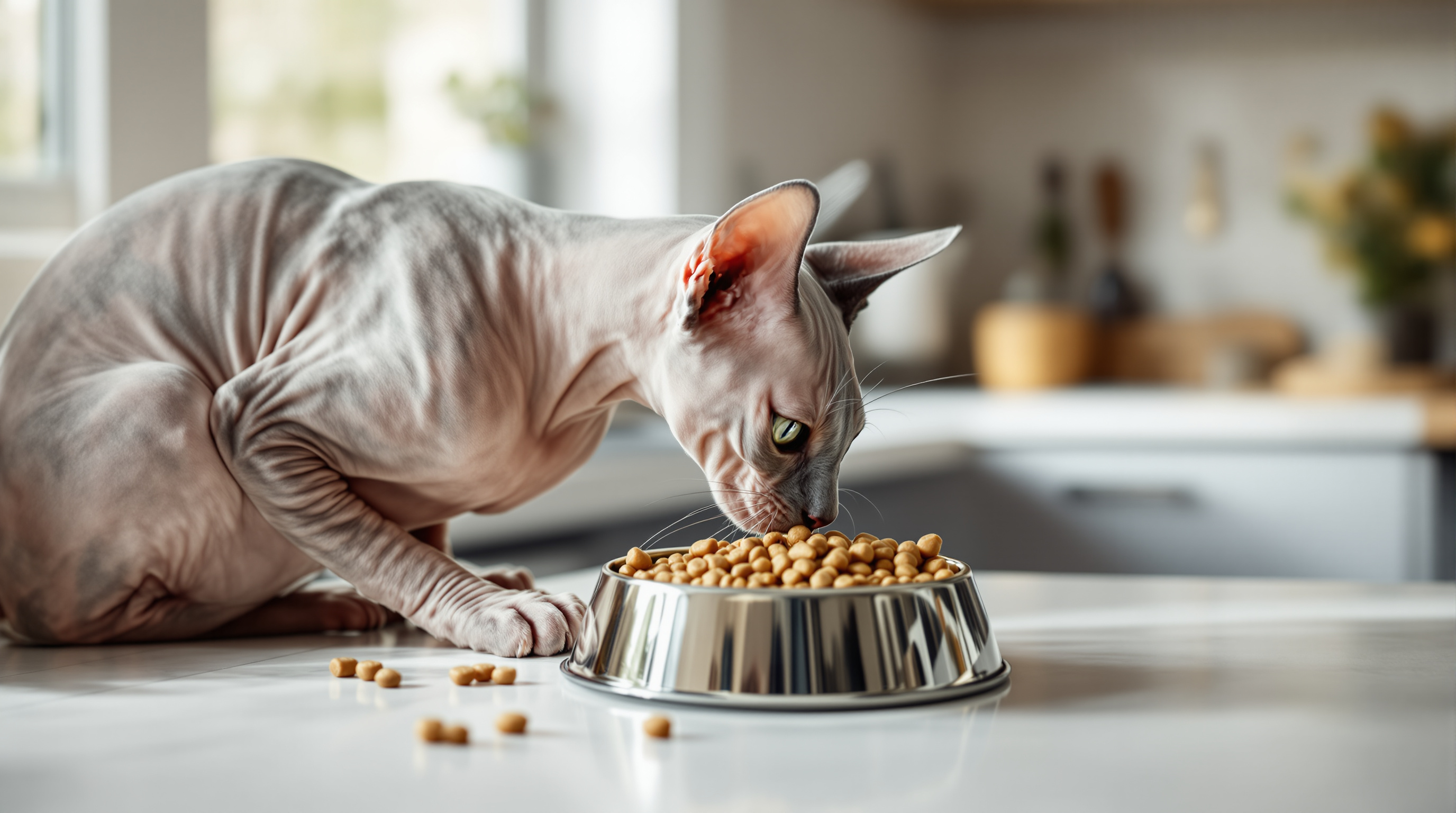
Understanding the unique dietary needs of hairless cats and how to keep them properly nourished.
Hairless cats have unique nutritional requirements that differ significantly from their furry counterparts. Due to their lack of fur and higher metabolism, they require more calories to maintain body temperature and energy levels. Understanding these needs is essential for keeping your hairless companion healthy and thriving.
Hairless cats typically need 20-40% more calories than cats of similar size with fur. Their bodies work harder to maintain a normal temperature of around 100-102°F, which burns additional energy throughout the day.
As obligate carnivores, hairless cats thrive on high-protein diets. Protein supports muscle maintenance, skin health, and provides sustained energy.
The Association of American Feed Control Officials (AAFCO) recommends minimum 26% protein for adult cats, but hairless breeds often do better with higher levels.
Dietary fats are crucial for hairless cats. They provide concentrated energy and support skin health - particularly important without fur protection.
Look for foods with 15-20% fat content. Some owners supplement with fish oil capsules (consult your vet for dosage).
Both wet and dry foods have their place in a hairless cat's diet. Many owners find a combination works best.
Due to their higher metabolism, hairless cats often do better with multiple smaller meals throughout the day rather than one or two large ones.
Many hairless cats prefer to graze throughout the day. If your cat maintains a healthy weight, free-feeding dry food can work well.
Proper hydration is essential for skin health and overall wellbeing. Hairless cats may lose more moisture through their skin than furry cats.
Some foods can cause digestive upset or health issues in hairless cats:
Meeting a hairless cat's elevated nutritional and care needs requires consistent effort from pet owners. The increased feeding frequency, careful meal preparation, weight monitoring, and specialized dietary management demand sustained owner energy and focus. Many dedicated hairless cat owners recognize that maintaining their own metabolic health and vitality enables them to provide better care for their demanding pets.
Hairless cat care involves more than just putting food in a bowl. Owners typically engage in:
For pet owners interested in optimizing their own metabolic health and energy levels to better manage the demands of hairless cat care, several educational resources provide valuable perspectives:
The connection between owner vitality and quality pet care is increasingly recognized in veterinary wellness research. When owners maintain their own metabolic health and energy levels, they're better equipped to handle the consistent demands that hairless cat nutrition and care require.
A well-balanced, high-quality diet is one of the best investments you can make in your hairless cat's health. Monitor their weight, energy levels, and skin condition as indicators that their nutritional needs are being met. When in doubt, consult with your veterinarian about the best diet for your individual cat.